Hotels Locations

more locations
hide locations
inisrael.com travel guide

Search for

Enjoy Israel

HE
Tower of David Museum Jerusalem
inisrael.com travel guide

Israel Hotels

Enjoy Israel

Tower of David Museum Jerusalem

Tower of David Museum Jerusalem

Jerusalem travel guide

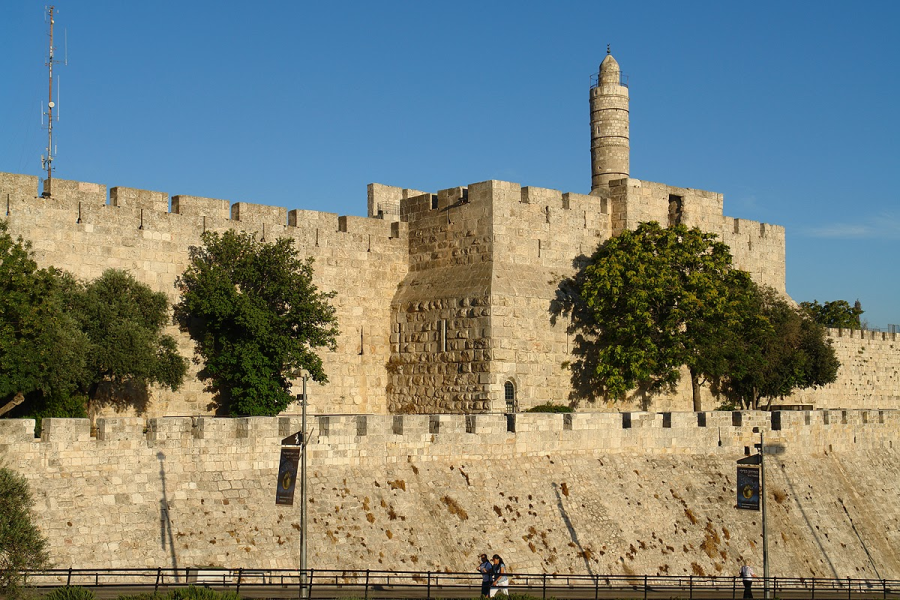
Set in the magnificently restored ancient Citadel’ first constructed 2,000 years ago by Herod the Great, the Tower of David Museum traces Jerusalem long and eventful history through state-of-the-art displays and exhibits’ utilizing the most advanced technologies. Canaanites and Hebrews, Greeks and Romans, Crusaders, Muslims, Turks, British, and Israelis are richly presented and seek harmony within the age-old walls. The panoramic route along the Citadel towers with its most breathtaking views of the city and the lush archaelogical gardens, all add to an experience you will cherish.

For the first time, the City of David reveals the story of the revival of ancient Jerusalem in a unique and exciting show screened in the first groundbreaking technology of its kind in Israel, on top of the antiquities of the City of David, under the open sky!

More than 2,500 years ago, Jerusalem was destroyed – and the Babylonian exile began.

The story of the revival of ancient Jerusalem is told through an advanced technological show projected on the antiquities of the City of David – right where history took place.

Exploring the Ancient Herodian Quarter of Jerusalem

Exploring the Ancient Herodian Quarter of Jerusalem

There is no other city in the world quite like Jerusalem. This city is so much more than a physical location; it is full of historical and spiritual significance. One of the most remarkable places to explore in Jerusalem is the Herodian Quarter, which dates back over 2000 years and still retains its original architecture from when it was first built. Let's take a journey through this ancient quarter and learn about its fascinating history. The History of the Herodian Quarter The Herodian Quarter was built during the reign of King Herod (37 BCE to 4 BCE). The quarter was located outside the walls of what was then known as the Old City, near today's Damascus Gate entrance. It was intended as a place for wealthy residents to live and enjoy luxurious amenities such as private gardens, public baths, palaces, and temples. The beautiful mosaics that remain today are testament to how impressive this area once was. The quarters were destroyed by the Romans in 70 CE in response to Jewish revolts against their rule. The stones from the quarter were used to build new structures elsewhere in the city. In recent times, however, archaeologists have uncovered some of these ancient stones and put them back together again to give us an insight into what life must have been like during King Herod’s reign. Today’s Visitors Experience - At the moment it is closed for renovations! Today, visitors can explore this ancient site by taking guided tours or simply wandering through on their own accord. The ruins are surrounded by modern-day shops and restaurants which give visitors a unique glimpse into how this part of town has evolved over time. You can also take a trip up onto one of the many hilltops where you will get stunning views over Jerusalem’s rooftops - perfect for those looking for an unforgettable photo opportunity! The Herodian Quarter is an incredible place full of history and culture which offers something special for all kinds of visitors. Whether you’re looking for an educational experience or just want to soak up some atmosphere, exploring this unique part of Jerusalem could be right up your street! So come along and experience first-hand what life must have been like hundreds of years ago during King Herod’s reign!

The Jerusalem Science Museum

The Jerusalem Science Museum

The Bloomfield Science Museum is the place for learning about science with interactive displays that invite children and parents to touch, experience, and enjoy science. The museum offers guided tours, construction workshops, and special events with new exhibits, guest exhibitions, workshops, demonstrations, activities, and live shows. On Fridays and Saturdays, the entrance to the museum is free of charge. The history of the Science Museum In 1980, a group of scholars from the Hebrew University came together with the goal of establishing a permanent space for exhibiting science in ways that will enthrall and attract everyone: adults, teenagers and even very young children. The group sought to model the new museum on the Exploratorium in San Francisco, which was founded by Frank Oppenheimer in 1969. Together with Canada’s Ontario Science Centre, which opened in the same year, these institutions presented the world with an innovative model for interactive science museums. The group led by Professor Hillman established a non-profit called “Simply Science” for the purpose and set to work. “Simply Science” operated from the Givat Ram campus for ten years. The science museum is working on a project to build a museum of nature in Israel as part of a shared campus. This campus will show how different scientific disciplines are connected, as well as how they can be used to understand the world around us. Museum Hours Sunday closed Monday–Thursday 10:00-18:00 Friday 10:00-14:00 Saturday 10:00-16:00

Jerusalem's History

Jerusalem's History

Jerusalem's history stretches back about 5,000 years. About 2500 BC, the Canaanites inhabited the city. Later, Jerusalem became a Jebusite citadel. When DAVID captured the city (c.1000 BC), the Jebusites were absorbed into the Jewish people. David made Jerusalem the capital of his kingdom, and SOLOMON built the first Temple to house the Ark of the Covenant. In 586 BC, the Babylonian NEBUCHADNEZZAR II destroyed Jerusalem and the Temple and exiled the Jews to Babylonia. Fifty years later (537 BC), CYRUS THE GREAT of Persia conquered Babylonia and permitted the Jews to return to Jerusalem and rebuild their Temple. Persia held the city until 333 BC, when ALEXANDER THE GREAT added Palestine to his empire. In 323 BC, PTOLEMY I of Egypt took Palestine into his kingdom. About 198 BC, the Seleucid king ANTIOCHUS III conquered Judaea (of which Jerusalem was a part), making it tributary to Syria. The Jews later revolted under the leadership of Maccabees and defeated the Syrians. The Temple was reconsecrated in 165 BC, and the Maccabean, or Hasmonean, dynasty ruled until Rome took the city in 63 BC. The Romans set up a local dynasty, the house of Herod, to rule most of Palestine; Herod the Great (r. 40-4 BC) rebuilt much of Jerusalem, including the Temple. Roman governors, however, retained ultimate control; one of them, Pontius Pilate, authorized the execution of Jesus Christ. While suppressing a major Jewish revolt, the Romans destroyed the Second Temple in AD 70. In 135, after the failure of the BAR KOCHBA revolt, Jews were banished from Jerusalem. From the early 4th century, when Christianity became legal in the Roman Empire, Jerusalem developed as a center of Christian pilgrimage. The Church of the Holy Sepulcher and many other Christian shrines were erected. Except for a brief period of Persian rule (614-28) the city remained under Roman (later, Byzantine) control until 638, when the Muslim Arabs took Jerusalem. The Arabs built (688-91) the Dome of the Rock mosque on the site of the Temple. In the 11th century, Muslim toleration of both Jews and Christians gave way to persecution under the FATIMID caliph al-Hakim (r. 996-1021) and under the SELJUKS, who seized Jerusalem in 1071. European Christendom responded by launching the CRUSADES. The Crusaders conquered Jerusalem in 1099 and established a Crusader state. SALADIN recaptured the city for the Muslims in 1187, and the Ayyubid and Mameluke dynasties ruled until 1517, when the Ottoman Empire took control. In 1917 the British occupied Jerusalem, and it became the capital of mandated PALESTINE from 1923 until 1948. During this period the city saw Arab rioting against the Jews. The 1948 United Nations partition plan for Palestine called for internationalization of the city. The Arabs rejected this resolution, and, from 1949, Jerusalem was divided into an Israeli and a Jordanian sector. The city remained divided until 1967, when Israel took the entire city following the Six Day War. The city is reunited today under Israeli government, which guarantees religious freedom and protection of all holy places.

Jerusalem - one of a kind
Please wait...
  • Please wait while the system searches for you the perfect vacation at the best prices.

Search for

Why Inisrael.com?

  • Book direct - We connect you to the hotels.
  • The best hotel deals in Israel.
  • You pay at the hotel - upon arrival.
  • Credit card for room guarantee, no upfront payment.
  • The first israel booking site since 1996.