Hotels Locations

more locations
hide locations
inisrael.com travel guide

Search for

Enjoy Israel

HE
Church of the Holy Sepulchre
inisrael.com travel guide

Israel Hotels

Enjoy Israel

Church of the Holy Sepulchre

Church of the Holy Sepulchre

Jerusalem travel guide

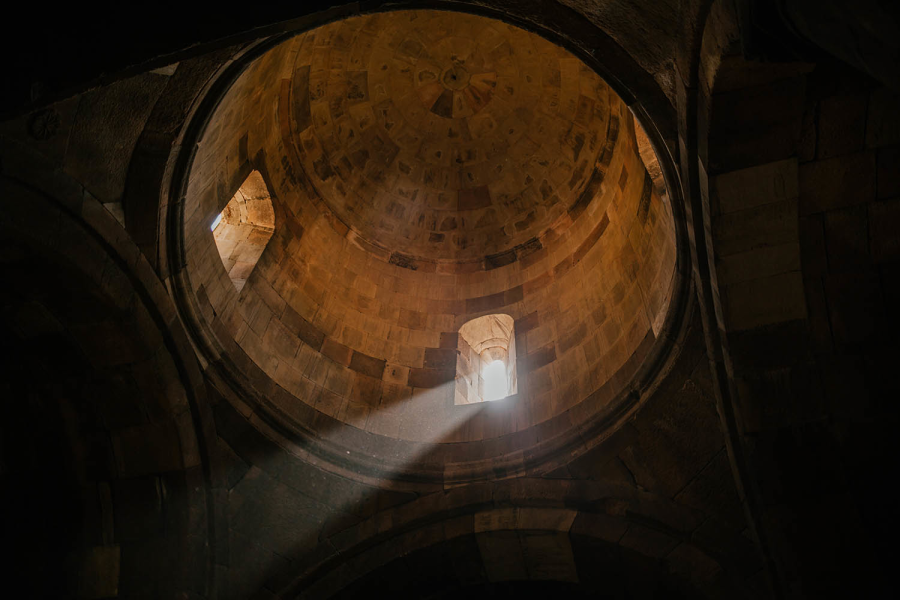
The holiest Christian shrine in the world is situated on the Hill of Golgotha (skull hill), used to be an execution location outside the city walls. According to Christian gospels, and with compatibility to archeological discoveries, this is the real site of Jesus’ crucifixion, burial and resurrection.

The beautiful architecture of the Church of the Holy Sepulchre is a combination of Crusader, Byzantine and Greek structures. In addition, five Christian communities share the Church today: the Roman Catholic, the Greek Orthodox, the Armenian, the Coptic and the Syrian Orthodox, each has its own part inside the church.

The Holy Sepulchre History:

In 335 AD, Constantin, the Emperor of Byzantium, and his mother, Helena, built a splendid church on the exact site where the massive excavations they ran revealed the tomb of Jesus. The church was completely destroyed by Caliph El-Hakim in 1009, partly reconstructed by the Byzantines in 1042, and entirely rebuilt by the Crusaders when they entered Jerusalem on July 15, 1099.

However, a big fire in 1808 caused a lot of damaged to the church, which had been repaired by the Greek Orthodox during the last century. The architecture of the church as it exists today is therefore a combination of Crusader, Byzantine and Greek structures.

Information:

Visitors of all religions are requested to enter the Church of the Holy Sepulchre modestly dressed. The church is open daily from 5:00am to 9:00pm (4:00am to 8:00pm at wintertime), admission is free. The church can be reached from Jaffa Gate, through the Christian Quarter St., or from the Lions Gate following Jesus’ footsteps along the Via Doloroza.

Virtual Tours of the Church of the Holy Sepulcher

Jerusalem in the time of the Second Temple

Jerusalem in the time of the Second Temple

A Journey following Jerusalem in the time of the Second Temple The Second Temple period, between 538 BCE and 70 CE is considered to be a time of Jerusalem's glory. This is due to the magnificent castles and walls that were built in the city, especially towards the end of the 600 years, with the rise of King Herod. The temple, built in 516 BCE by the Jews returning to Zion after the Babylonian exile was the heart of the city till its destruction in 70 CE. Having said that, one must understand, that the political and social situation in those days was extremely complex, with so many different religious streams trying to get hold of the spiritual leadership in Jerusalem, it seems that the rip inside the Jews, was what inevitably brought to Jerusalem's destruction by the Romans. This suggested tour follows some of the archeological milestones of the time through the old city and its surroundings, which give light to the historical period and political background of the time as well. Probably the best way to start off the journey would be by visiting the Model of Jerusalem in the late second Temple Period, located at the Israel Museum. The model, which is the size of 2,000 square meters at a 1:50 ratio, displays the entire city at that time from a birds view, showing off the temple and the roads and buildings surrounding it. After having seen the model and understanding the destruction the city went through (by comparison to what's left today) it's time to go to the Old City. Entering through Jaffa gate, we will already be able to see parts of the Second temple's time architecture. Originally believed to have been built by King David, the Tower of David situated at the entrance to the old city, was actually built during the time of the second temple by the Hashmonaim, as noted by Josephus Flavius, a historian who lived in the time of the great revolt. Later on it received a face lift and two more towers around it, as part of Herod's plans of glorifying the city. After the destruction of the city once more, the ancient citadel continued to serve the Romans as barracks for their soldiers. Throughout the years, the tower had been destructed and reconstructed by many, yet still the lower layers of the tower and of the old wall, are genuine to the period. Passing the tower, we head to the Jewish Quarter to the Wahl Museum of Archeology, also known as the Herodian Suburb. The museum depicts life in the time of the second temple in Jerusalem. Original mosaics, stone tools and various objects of art portray the high quality of life experienced at the time in the city. In order to complete the picture it's recommended to continue to the excavated Burnt House, said to have been burned by the Romans, where you can watch a 12 minute audio–visual presentation about the political and social events which led to the house's burning. Ending the tour near the western wall, you can either choose to walk underground through the Western Wall Tunnels, where you can take a tour of the most ancient layers of the wall, or walk above ground in the area of The Archeological Garden of Jerusalem. There you can see the excavated Robinson's Arch which once stood at the southwestern corner of the Temple Mount as well as the old market street and the steps that used to lead to the temple up until 70 CE.

The Holy sites of Jerusalem

The Holy sites of Jerusalem

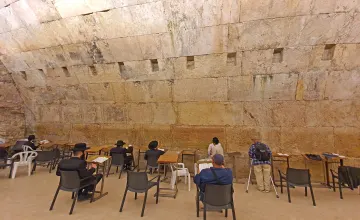
Being the most important city for all major religions, the old city of Jerusalem is probably the most fascinating trip you can make while visiting Israel. The history of Jerusalem combines some of the most important events in Jewish and Christian history alike, and the religious sites spread throughout the city capture the imagination of each and every visitor. The Wailing Wall (the Western Wall) is the first stop for Jewish travelers in the old city of Jerusalem. It is the only remaining part of the ancient temple of King Solomon which has become the holiest spot in Jewish life and an Israeli national symbol as well. The Wailing Wall is where Jewish worshipers pray in a designated area in front of the holy site; mourn over the destruction of the Temple by the Romans, and wish for the return of Israel's former glory. They also write their personal requests from G-d and post it in little notes between the wall's ancient stones. Mount Zion is another Jewish and Christian holy site you wouldn't want to miss. According to Jewish tradition, Mount Zion is the burial place of King David. Today, it is one of the most popular Jewish burial sites in Jerusalem. Mount Zion is very significant for Christians as well: according to Christian belief, it is where the last supper was held, in the building identified as the Coenaculum, which is also where Jesus reappeared after his resurrection. According to Christianity, in this area of the city the disciples and early Christians were living at the time. Beyond its history, Mount Zion offers some spectacular views of the old city of Jerusalem. Jerusalem's vicinity offers several other significant sites for Christian visitors: the nearby Bethlehem, where Jesus was born; the Mount of Olives, where he ascended to heaven, according to Christianity; and the Church of the Holy Sepulcher, which is the first among the Christian shrines in the Old City of Jerusalem, where the resurrection has been celebrated for many centuries as the most sacred place in all of Christendom. Plus there is the Via Dolorosa, the holiest Christian thoroughfare in the world: This path is symbolically reliving the events of the passion, and includes the shrine of the ascension, the Garden of Gethsemane and Mount Zion. The holy sites of the old city of Jerusalem have defined its nature for thousands of years and still reflect its remarkable history and significance. Visiting some of these sites and wondering through the streets and markets of the old city is an experience you will carry with you for many years after visiting one of the most special cities in the entire world.

Mamilla Alrov Mall, Jerusalem

Mamilla Alrov Mall, Jerusalem

The summer vacation is at its peak, and it seems like there's no stopping the mall from becoming the hottest venue for all events during the vacation months. And if you're going to be shopping, you should definitely check out the Mamilla Mall in Jerusalem - a city in which anyone who doesn't live there or wasn't born there feels like a tourist. The mall is situated opposite the Jaffa Gate, close to the Mamilla Jerusalem Hotel and is part of the exclusive area that overlooks the Old City of Jerusalem. The Mamilla Mall is an open-air mall, built as a boulevard that preserves the area's architectural heritage, while integrating it into a modern day shopping experience. There are 120 stores in the mall, both national chains as well as select stores belonging to local and international designers, boutiques, cafes and restaurants. The mall also has a closed auditorium where various performances are held, and where games and entertainment options are available for children. Among the huge variety of stores in the mall are: Mango, MAC, GAP, Castro, Steimatzky, H. Stern, BEBE, Polo Ralph Lauren, Nautica, Tommy Hilfiger, Topshop and many, many more! Among the luxury international stores that recently immigrated to Jerusalem, you'll be able to find Rolex Show, which is Rolex's flagship store. The mall also hosts a number of other luxury brands including Gucci, Rado, Lacroix, Omega and many others. The Nike store has a European design and carries unique and exclusive styles. Other stores in the mall include Crocs, the only one in Jerusalem, and The North Face - one of the leading brands in the world for climbing and backpacking equipment, mountaineering apparel and skiwear. The mall offers its patrons an adjacent, indoor parking lot.

Jerusalem - one of a kind
Please wait...
  • Please wait while the system searches for you the perfect vacation at the best prices.

Search for

Why Inisrael.com?

  • Book direct - We connect you to the hotels.
  • The best hotel deals in Israel.
  • You pay at the hotel - upon arrival.
  • Credit card for room guarantee, no upfront payment.
  • The first israel booking site since 1996.