
Hotels Locations

more locations
hide locations
inisrael.com travel guide

Search for

Enjoy Israel

HE
Mount of Olives Observation Point: A Must-Visit Destination in Jerusalem
inisrael.com travel guide

Israel Hotels

Enjoy Israel

Mount of Olives Observation Point: A Must-Visit Destination in Jerusalem

Attractions travel guide

Jerusalem, the holy city, is known for its rich cultural and historical heritage. It is home to several historical sites, religious monuments, and ancient structures that have stood the test of time. One of the most prominent attractions of Jerusalem is the Mount of Olives Observation Point, which offers breathtaking views of the city and its surroundings. This article will provide you with a brief overview of this iconic destination and why it is a must-visit for travelers.

Location and Access

The Mount of Olives Observation Point is situated in the east of Jerusalem, adjacent to the Mount of Olives Cemetery. It is easily accessible via public transportation, taxis, or private cars. Visitors can also take a walking tour to the observation point, which is a great way to explore the city’s historical sites and landmarks.

Historical Significance

The Mount of Olives has significant religious and historical importance, which makes it a significant destination for people of all faiths. According to the Bible, Jesus spent time on the Mount of Olives, and it is also believed to be the location where he ascended to heaven. It is also the site of several important events in the Old and New Testaments, such as King David’s flight from Jerusalem and Jesus’ prophecy of the Second Coming.

Observation Point

The Mount of Olives Observation Point offers panoramic views of Jerusalem’s Old City, including the Dome of the Rock, the Western Wall, and the Church of the Holy Sepulchre. Visitors can take in the stunning views of the city and its surroundings while enjoying the serene atmosphere of the observation point. It is also an excellent spot for photographers, who can capture the city’s beauty from a unique perspective.

Tips for Visitors

Visitors should wear comfortable shoes, as there is a considerable amount of walking involved in reaching the observation point. It is also recommended to bring water and sunscreen, as the area can get hot and dry during the summer months. Additionally, visitors should respect the religious and cultural significance of the site and dress appropriately.

Conclusion

The Mount of Olives Observation Point is a must-visit destination for anyone visiting Jerusalem. Its historical and religious significance, combined with its breathtaking views of the city, make it a unique and memorable experience. Whether you’re a photographer, a history buff, or simply looking to take in the city’s beauty, the Mount of Olives Observation Point is an unforgettable destination. Plan your visit today and discover the wonders of Jerusalem from a whole new perspective.

Discover the Unique Beauty of El Al Stream: A Comprehensive Guide to Hiking in Golan's Scenic Terrain

Unraveling the Etymology of El Al Creek. The captivating El Al stream in the southern Golan winds through the narrow Wadi Dufila canyon, colloquially known as the "Haunted Bush Creek." This picturesque stream spans 20 kilometers, the trek through its alluring central section offering a sight to behold. Adorned with two grand waterfalls, each with their own unique charm and inviting water pools at their bases, Nahal El Al holds the title as the southernmost perennial stream in the Golan region. The "Black Waterfall," a beautiful basalt spectacle, cascades from an impressive height of about 8 meters. In stark contrast, the "White Waterfall" is a limestone structure that flows from an approximate elevation of 20 meters. This year-round stream and its idyllic natural pools are sightseers' delights. The pathway through this wondrous terrain can commence at Moshav Eliad and conclude at the parking lot adjacent to the waterfalls, near Moshav Avni Itan. Alternatively, the journey can be experienced in reverse order. Strollers can enjoy a route parallel to the stream, teeming with life throughout the year. Exploring the Route Embarking on this journey, you'll descend into the stream as directed by signs, following the red-marked path through an olive vineyard, between hedgerows, and into the gorge that descends from the El Al village ruins. After crossing the gorge, you'll encounter a picturesque viewpoint. It's here where the stream forms a "knee," altering its flow direction from southwest to northwest. Continuing along the red path near the olive grove, you'll descend a white chalk rock slope towards the white waterfall after about 500 meters. Once you near the waterfall, a staircase fashioned from railway sleepers diverts you to the pool at the base of the waterfall. Progressing further to the Black Waterfall, you'll resume your journey along the red-marked path, situated at the top of the white waterfall, and cross the stream. The path meanders alongside the stream, within a thicket of haunted bushes, and ascends slightly after about 500 meters. The path stays a few meters above the gorge, where the white rock gradually transitions to black basalt rocks. As you continue your trek, ensure you follow the "transparent" marking (two white stripes with no color in the middle) towards the black waterfall. This waterfall cascades onto basalt rocks, forming a small pool surrounded by dolav trees that cast a cooling shade. Finally, return to the red trail, cross the stream's shallow bed, and ascend a steep climb back to the parking lot in Moshav Avni Eitan. Geological Wonder The coexistence of a white waterfall and a black waterfall is a truly unique and fascinating spectacle. The Golan's basalt kilhos blanket thick layers of white marine sedimentary rocks. The water first creates a waterfall as it travels beneath the black basalt rock, then continues to cut deeper until it reaches the sedimentary rocks beneath the basalt, forming a second waterfall. Note: Swimming in the creek pools is undertaken at the swimmers' own risk. Given the route's length, it's recommended to arrange transport at the endpoint. You can return to the starting point via a 3.5 km boardwalk connecting Eliad and Avni Eitan. Travel and Safety Guidelines: In the Golan, adherence to the marked path is critical; crossing fences or straying off the path can lead to dangerous minefields. Never venture into areas designated for army shooting training! Always pass through cattle fences at designated points, opening and closing gates as needed. Avoid climbing or cutting fences, and exercise caution when crossing or walking on roads. Overnight stays are only permitted at designated sites, and fires should never be left unattended or lit under trees. Toilet paper should not be burned, and all trash should be taken with you to preserve the natural beauty of the area.

Timna Park: A Desert Wonderland in Southern Israel

Timna Park: A Desert Wonderland in Southern Israel

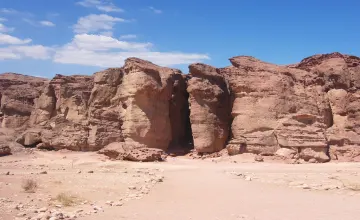
Timna Park is a unique and breathtaking desert park located in southern Israel. With its stunning geological formations, colorful landscapes, and rich history, Timna Park is a must-see destination for anyone visiting Israel. Geological Wonders One of the main attractions of Timna Park is its impressive geological formations. The park is home to a variety of unique rock formations, including the famous "Mushroom," a towering mushroom-shaped rock that stands over 15 feet tall. Visitors can also explore the stunning "Solomon's Pillars," towering sandstone columns that were once believed to be the remains of an ancient temple. Colorful Landscapes During the springtime, Timna Park is covered in a blanket of colorful wildflowers and plants, making it a great destination for nature lovers. Visitors can take a leisurely walk through the park's many trails, taking in the vibrant colors and breathtaking views. The park is also home to a variety of wildlife, including foxes, hyenas, and ibexes. Rich History Timna Park has a rich history that spans thousands of years. The park was once an important center for copper mining, and visitors can explore the many ancient mines and smelting sites that dot the landscape. The park is also home to a number of archaeological sites, including the remains of a 3,000-year-old temple and the "Egyptian Temple," a unique structure that is believed to have been built by ancient Egyptian miners. Activities and Amenities Timna Park offers a variety of activities and amenities for visitors of all ages. The park has a visitors' center where visitors can learn about the park's history and geology, as well as a gift shop and restaurant. There are also a number of picnic areas and campsites available for those who want to spend more time in the park. For those looking for adventure, Timna Park offers a variety of outdoor activities, including hiking, biking, and rock climbing. The park also has a lake where visitors can swim and kayak, as well as a zip-line and a ropes course for those seeking more thrills. Getting There Timna Park is located in southern Israel, about 17 miles north of the city of Eilat. The park is easily accessible by car or bus, and there is ample parking available on-site. Entrance fees vary depending on the season and type of activity, but are generally affordable. Conclusion Timna Park is a true gem in the heart of the desert, offering visitors a unique blend of natural beauty, rich history, and exciting activities. Whether you're a nature lover, a history buff, or an adventure seeker, Timna Park is a must-see destination in Israel.

Mount of Olives Observation Point: A Must-Visit Destination in Jerusalem Mount of Olives Observation Point: A Must-Visit Destination in Jerusalem

The Magnificent Great Synagogue of Tel Aviv: A Must-See for Visitors and Locals

Tel Aviv, one of the most vibrant cities in the Middle East, is home to many architectural wonders, including the Great Synagogue. Situated in the heart of Tel Aviv, this synagogue is a must-see for anyone interested in Jewish history, architecture, and culture. The Great Synagogue of Tel Aviv, the building was designed by Yehuda Magidovitch in 1922 and completed in 1926, just a few years after the establishment of Tel Aviv as a city. It was designed by Yehuda Magidovitch, a Russian-born architect who studied in Moscow and worked in Europe before immigrating to Palestine. Magidovitch was known for his eclectic style, combining elements of Art Deco, Art Nouveau, and neo-classical architecture. His design for the Great Synagogue reflects this style, with its elegant facade, soaring dome, and intricate details. As one approaches the Great Synagogue, the first thing that strikes the eye is the grandiose entrance. The entrance, with its towering columns and ornate decorations, is a nod to the classical architecture of ancient Greece and Rome. Above the entrance, there is a large round window that lets in light and gives the synagogue an airy feel. Once inside the synagogue, visitors are greeted with a grand hall that is both spacious and intimate. The hall is filled with light from the large windows and the magnificent chandelier that hangs from the ceiling. The walls are decorated with murals and mosaics that depict scenes from Jewish history and tradition. The focal point of the Great Synagogue is the Aron Kodesh, the holy ark that contains the Torah scrolls. The Aron Kodesh is located in the center of the eastern wall and is adorned with beautiful carvings and decorations. Above the Aron Kodesh, there is a large dome that is supported by pillars and decorated with intricate patterns. The Great Synagogue of Tel Aviv is not only a place of worship but also a center of Jewish culture and community. It hosts concerts, lectures, and other events that celebrate Jewish heritage and traditions. The synagogue is also home to the Tel Aviv Museum of Jewish Art, which has a collection of Judaica and Jewish-themed art from around the world. In conclusion, the Great Synagogue of Tel Aviv is a magnificent example of Jewish architecture and culture. Its elegant facade, grand hall, and intricate details make it a must-see for anyone interested in Jewish history and culture. Whether you are a visitor to Tel Aviv or a local resident, a visit to the Great Synagogue is sure to be a memorable experience.

Israel's favorite attractions
Please wait...
  • Please wait while the system searches for you the perfect vacation at the best prices.

Search for

Why Inisrael.com?

  • Book direct - We connect you to the hotels.
  • The best hotel deals in Israel.
  • You pay at the hotel - upon arrival.
  • Credit card for room guarantee, no upfront payment.
  • The first israel booking site since 1996.